A camera moves in
A computer the size of a stick of chewing gum, a wide-angle camera and a wireless thermometer are going to put Olaf and Alinea online.
The rabbit house is getting its own camera, so we (and you) can look in at any time. Here is how it all fits together.
How the picture gets from the house to you
The camera
sees the whole house across 120°
Raspberry Pi Zero 2 W
turns the picture into video
WiFi
via a WiFi extender
Our server
hands out the video
You
on kaninhus.dk
The camera only sends when someone is watching, and for a brief moment every 5 minutes, when the server takes the day’s photos. And it only sends one copy, however many people are watching: it is our server that hands it out to everyone.
The brain: Raspberry Pi Zero 2 W
The whole thing is run by a Raspberry Pi Zero 2 W. It is a computer of 65 × 30 millimetres, about the size of a stick of chewing gum. It has four 1 GHz processor cores, 512 MB of memory and both WiFi and Bluetooth built in. The video is compressed by a special chip in the computer, so the four cores have time for everything else.
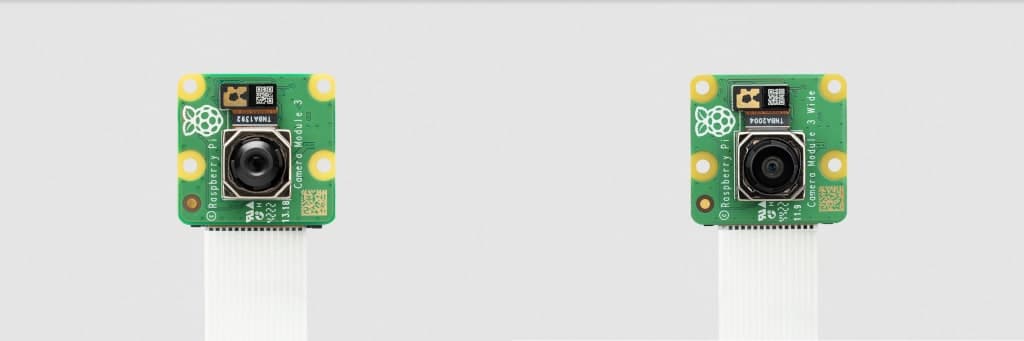
The eye: Camera Module 3 Wide
The camera is Raspberry Pi’s Camera Module 3 Wide with a 12 megapixel sensor from Sony. It sees 120 degrees, so one camera in a corner takes in the whole house. It has autofocus, and it can run HDR: it captures the bright and dark parts of the picture at the same time, so the rabbits don’t vanish into the shadows, even when it is bright by the window.
The video runs at 1080p with 30 frames per second. That is the most the computer’s video chip can handle.
The thermometer
A small wireless thermometer hangs at rabbit height and sends the temperature over Bluetooth. The computer listens for it for ten seconds every minute, so the WiFi isn’t disturbed. The temperature is shown in the corner of the video.
If it gets colder than 0 degrees or warmer than 25, we get a message on our phones. Rabbits cope badly with heat, and above 25 degrees it gets too much for them.
The case
The computer and camera will live in the same small case. It is being 3D printed at the library and sits on a ball joint, so the camera can point exactly where the rabbits like to get cosy.
The camera in numbers
| Part | What |
|---|---|
| Camera | Raspberry Pi Camera Module 3 Wide |
| Sensor | Sony IMX708, 12 megapixels |
| Field of view | 120° |
| Video | 1080p, 30 frames per second, with HDR |
| Computer | Raspberry Pi Zero 2 W: 4 cores at 1 GHz, 512 MB of memory |
| Thermometer | SwitchBot Meter, via Bluetooth |
The parts have been ordered. The next step is to put it all together and hang it up.
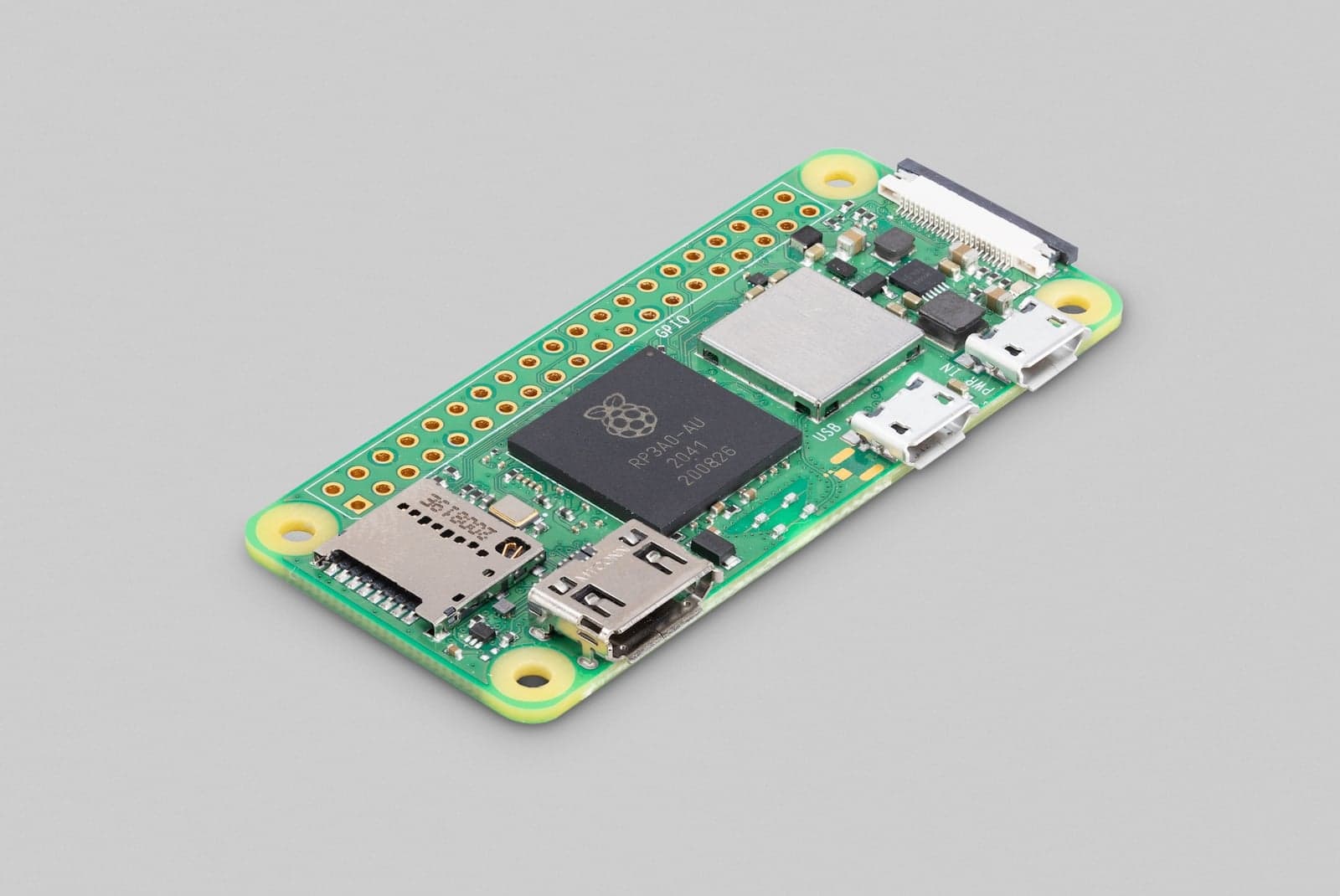
Raspberry Pi Zero 2 W, the computer that runs the camera. It measures 65 × 30 millimetres.Photo: Raspberry Pi Ltd, CC BY-SA 4.0. Resized. 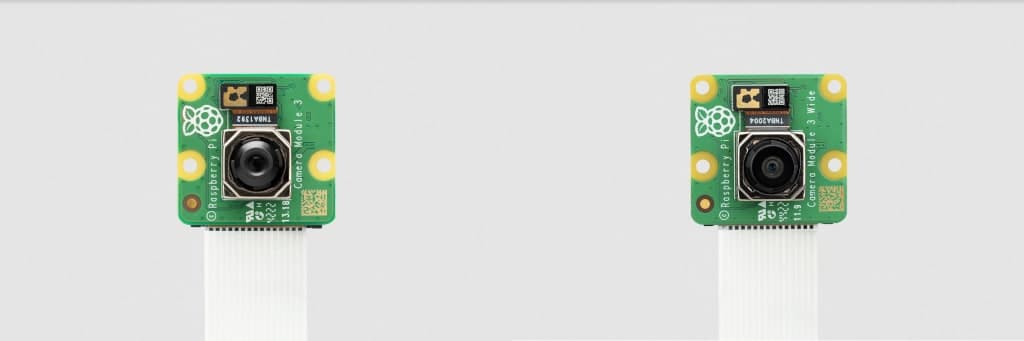
Camera Module 3 on the left and Camera Module 3 Wide on the right. We use the Wide version with the larger lens, which sees 120 degrees.Photo: Raspberry Pi Ltd, CC BY-SA 4.0. Resized.